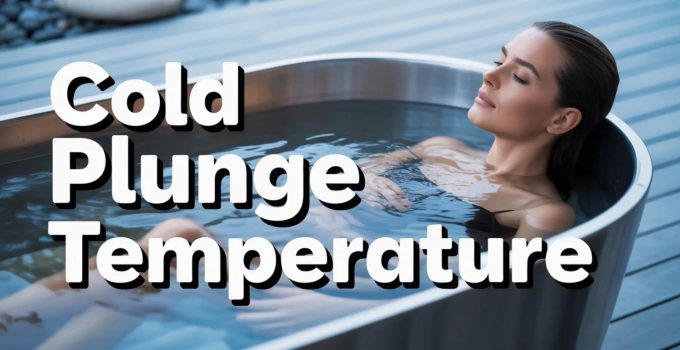
If you scroll through social media, you might believe that unless you are breaking a layer of ice on a frozen lake or sitting in a 34°F chest freezer, you aren’t “doing it right.” The culture of cold plunging often glorifies the extreme—the colder, the better.
This is a myth.
While there is certainly a place for extreme cold in advanced resilience training, the biological reality is far more nuanced. You do not need to risk hypothermia or endure excruciating pain to reap the benefits of cold water immersion. In fact, for many goals—such as fat burning, immune system support, and dopamine release—extreme cold can sometimes be counterproductive, leading to a shorter duration in the water and a higher risk of “cold shock” panic.
The “best” temperature is not a single number on a thermometer. It is defined by your “Threshold of Discomfort.”
This guide will break down the science of thermal stress to help you find your personal sweet spot. Whether you are looking to recover from a heavy workout, spike your metabolism, or simply build mental grit, the ideal temperature depends entirely on your experience level, your physiology, and your specific goals for the session.
The Science of Thermal Shock
To understand temperature, you first have to understand what you are trying to achieve. The goal of a cold plunge is to trigger a Cold Shock Response. This is a systemic physiological reaction where your body realizes it is losing heat rapidly and kicks into survival mode.
1. The Physiological Switch (It’s Warmer Than You Think)
Research shows that the Cold Shock Response does not require near-freezing water. The physiological “switch” tends to flip at approximately 60°F (15°C).
-
The Reaction: At this temperature, your skin sensors send an immediate alarm signal to the brain. This triggers the release of norepinephrine (focus/alertness), causes rapid vasoconstriction (blood moving to the core), and increases your heart rate.
-
The takeaway: If you are plunging at 55°F, you are already getting the vast majority of the neurochemical and circulatory benefits. Going down to 35°F intensifies the sensation of pain, but it doesn’t necessarily double the biological benefit.
2. Water vs. Air: The Conductivity Factor
Why does 50°F air feel brisk, but 50°F water feel freezing?
-
Thermal Conductivity: Water is approximately 24 times more conductive than air. This means it extracts heat from your body at a ferocious rate.
-
The “Bone Deep” Chill: When you step outside in 40°F weather, a thin layer of warm air gets trapped against your skin by your clothes or body hair (insulation). In water, that layer is instantly stripped away. The water makes direct contact with your skin, pulling heat directly from your blood and tissues. This is why a 50°F plunge is a significant thermal stressor, equivalent to being in roughly 20°F air without a jacket.
3. The Danger Zone
There is a point of diminishing returns, and it usually sits around the 40°F (4.4°C) mark.
-
Nerve Damage: Prolonged exposure to water below 40°F can lead to non-freezing cold injury (NFCI) or nerve damage in the extremities (fingers and toes).
-
The “Panic” Loop: For beginners, water this cold often triggers an uncontrollable gasp reflex. If you cannot control your breathing, you stay in a sympathetic (fight-or-flight) state the entire time. You miss out on the vagus nerve benefits (calming down under stress) because you never actually calm down.
-
Safety: Unless you are an experienced plunger with a specific training protocol, dropping below 40°F increases the risk of afterdrop and hypothermia without offering significantly better metabolic results than 45°F–50°F water.
The Three Temperature Zones
Just like heart rate zones in cardio training, cold water immersion has different “zones” of intensity. Each zone offers specific benefits and challenges. Understanding where you fall on this spectrum is the key to a sustainable and effective practice.
Zone 1: The Entry Level (55°F – 60°F)
Who is this for? Beginners, people with lower stress tolerance, or those focusing on recovery after moderate exercise.
-
The Experience: At this temperature, the water feels undeniably cold, but it doesn’t take your breath away instantly. You will likely gasp slightly upon entry, but you can regain control of your breathing within 10–15 seconds.
-
The Benefits:
-
Dopamine Release: You still get a significant neurochemical boost. Studies show that 57°F water is sufficient to trigger the famous 250% increase in dopamine.
-
Parasympathetic Activation: Because the shock isn’t overwhelming, it is much easier to practice calm, nasal breathing. This trains your nervous system to relax under pressure.
-
Sustainability: This is a temperature you can likely handle daily without dread. Consistency beats intensity; plunging 5 days a week at 55°F is better than once a month at 35°F.
-
Zone 2: The Metabolic Sweet Spot (45°F – 55°F)
Who is this for? Intermediate plungers, those seeking fat loss/metabolic health, and athletes looking for systemic inflammation reduction.
-
The Experience: This is “real” cold. The moment you step in, your body’s alarm bells ring loudly. Your skin may turn pink or red quickly due to the rush of blood to the core (vasoconstriction). You will likely feel the urge to shiver within 2–3 minutes.
-
The Benefits:
-
Brown Fat Activation: This temperature range is aggressive enough to significantly lower your skin temperature, signaling the body to activate Brown Adipose Tissue (BAT) to generate heat.
-
The Shiver Response: Staying in this zone long enough to induce shivering is the gold standard for metabolic health. Shivering releases succinate, a molecule that further powers up your brown fat mitochondria.
-
Insulin Sensitivity: Regular exposure to this zone improves how your muscles uptake glucose, aiding in blood sugar regulation.
-
Zone 3: The “Resilience” Zone (34°F – 45°F)
Who is this for? Advanced practitioners, those training for extreme environments, or individuals focusing specifically on mental fortitude (“grit”).
-
The Experience: This is painful. The cold bites immediately. Your hands and feet may ache or go numb within a minute (many users wear neoprene booties/gloves in this zone). The mental battle is intense—your brain screams at you to get out every single second.
-
The Benefits:
-
Mental Toughness: This is less about physiology and more about psychology. Forcing yourself to stay in near-freezing water requires immense “Top-Down” brain control. You are training your prefrontal cortex to override your limbic system (fight-or-flight).
-
Norepinephrine Spike: The shock here produces the highest spike in adrenaline and norepinephrine, leading to extreme alertness and focus immediately after.
-
Diminishing Returns: Biologically, you do not need to go this cold for general health. The risk of nerve damage and afterdrop increases significantly here. Sessions in this zone should be short (1–3 minutes max).
-
The Temperature-Duration Equation
One of the most common mistakes beginners make is obsessing over the temperature while ignoring the duration. These two variables are inversely related: The colder the water, the less time you need to achieve the same physiological stimulus.
Think of it like sun exposure. You can get a tan in 30 minutes at 90°F (high UV), or in 2 hours at 75°F (lower UV). Both provide a dose of radiation; the intensity determines the necessary time.
The Sliding Scale
There is no “perfect” time for everyone, but here is a general guideline based on current protocols:
-
55°F – 60°F: Aim for 5 – 10 minutes.
-
Why: The thermal transfer is slower here. To lower your core body temperature enough to trigger metabolic changes, you need a longer exposure.
-
-
45°F – 55°F: Aim for 3 – 6 minutes.
-
Why: This is the standard “Huberman” range. It’s cold enough to shock the system quickly but sustainable enough to breathe through.
-
-
34°F – 45°F: Aim for 1 – 3 minutes.
-
Why: Safety is paramount. At near-freezing, your extremities (fingers/toes) can suffer nerve damage or non-freezing cold injury (NFCI) after just a few minutes. The “shock” here is instantaneous.
-
The “Shiver” Test
Instead of staring at a stopwatch, learn to listen to your body’s biological feedback loop. The most reliable metric is shivering.
-
The Goal: You want to reach a point where you feel the urge to shiver, or perhaps start a mild shiver. This indicates that your body is actively fighting to warm up (thermogenesis).
-
The Limit: If you are shivering uncontrollably (teeth chattering violently, unable to speak), you have gone too far. This is a sign of mild hypothermia. Get out immediately and warm up slowly.
Frequency Over Intensity
Research suggests that total weekly duration matters more than single-session heroism.
-
The 11-Minute Rule: A study cited by Dr. Andrew Huberman suggests that 11 minutes total per week is the minimum effective dose for metabolic and neurochemical benefits.
-
Break It Down: It is far better to do four sessions of 3 minutes at 50°F (12 mins total) than one brutal 10-minute session at 35°F. Consistency keeps the signaling pathways for dopamine and immune function active.
Variables: Why “Cold” is Relative
Have you ever noticed that your friend might jump into 50°F water and chat casually, while you are hyperventilating at 60°F? This isn’t just about mental toughness; it’s physics and biology.
1. Body Composition (The “Seal” Effect)
Body fat is an excellent insulator.
-
The Mechanism: Subcutaneous fat (the fat under your skin) acts like a wetsuit. It slows down the rate at which heat leaves your core and muscles.
-
The Result: A person with higher body fat percentages will generally tolerate cold water longer than a very lean person. If you are extremely lean (vascular, low body fat), the cold penetrates to your core much faster. You may need warmer water (55°F+) or shorter durations to stay safe.
2. Surface Area-to-Mass Ratio
This is often why women tend to feel cold faster than men in water.
-
The Ratio: Smaller individuals generally have a higher surface area relative to their total body mass. This means they have more “skin” losing heat compared to the amount of heat-generating “engine” (muscle/organ mass) inside.
-
The Adjustment: If you are smaller or lighter, do not try to match the times of a 200lb person. Your body is cooling down significantly faster.
3. Acclimatization (Brown Fat Recruitment)
The first time you plunge, it is a shock. The tenth time, it is a routine.
-
Biological Adaptation: Over weeks of consistent exposure, your body recruits more Brown Adipose Tissue (BAT). This tissue is metabolically active and generates heat.
-
The Shift: As you build more brown fat, you become a better internal heater. 50°F water that felt freezing on Day 1 will feel manageable on Day 30 because your body is literally better at fighting the cold.
Safety: The “Afterdrop” Phenomenon
There is one specific physiological concept that every cold plunger must understand to avoid a dangerous situation. It is called The Afterdrop.
Most people assume that the moment they step out of the cold water, their body temperature starts to rise. This is false.
The Delayed Drop
When you are in the cold, your body constricts blood vessels in your arms and legs to keep the warm blood in your core (heart, lungs, brain). This is a survival mechanism. However, when you step out and start to warm up (or worse, jump immediately into a hot shower), those blood vessels dilate (open up).
-
The Mixing: The cold, stagnant blood from your extremities rushes back to your core and mixes with the warm blood.
-
The Result: This causes your core temperature to continue dropping for 10–30 minutes after you have left the water.
The Danger Zone
This is why you can feel “fine” when you get out, only to find yourself shivering uncontrollably and feeling disoriented 15 minutes later while getting dressed.
-
The Rule of Thumb: Always leave the water feeling like you could have stayed in for one more minute. Never push to the point of failure. If you are shivering violently in the water, the afterdrop will likely push you into mild hypothermia once you get out.
Conclusion
In the world of cold therapy, more is not always better. Better is better.
The “best” temperature for you is the one that you can stick to consistently.
-
For most people, that magic number is 50°F – 55°F.
-
This range provides the perfect balance: it is cold enough to trigger the metabolic, neurochemical, and immune benefits, but sustainable enough to practice daily without dread or injury.
Don’t get caught up in the ego contest of “who can go colder.” Your body doesn’t care about the number on the display; it cares about the stimulus. Whether you are at 55°F or 35°F, if you are breathing, focusing, and shivering, you are winning.
Start warmer than you think you need to. Listen to your body. And remember: the goal isn’t to survive the cold; it’s to thrive because of it.