
In the last five years, cold water immersion has graduated from a niche recovery tactic used by elite athletes to a mainstream wellness staple.
Fueled by the popularity of figures like Wim Hof and Dr. Andrew Huberman, millions of people are now waking up to the profound benefits of deliberate cold exposure. From dopamine spikes that rival pharmaceuticals to significant reductions in systemic inflammation, the science is clear: getting cold is good for you.
However, for years, the barrier to entry was high—and messy. Early adopters were forced into the “ice bath grind”: driving to the gas station, buying 40 pounds of ice, hauling it home, and dumping it into a bathtub, only to have the water melt and warm up within 20 minutes. It was expensive, inconsistent, and frankly, a hassle that prevented daily adherence.
Enter the Cold Plunge Tub with Chiller.
This technology has revolutionized home recovery. A dedicated cold plunge tub with a chiller unit solves the “ice problem” entirely. It offers water that is always clean, always circulating, and most importantly, always cold. It transforms a chore into a seamless daily ritual.
If you are looking for the best cold plunge tub with a chiller in 2025, the market is crowded with options ranging from inflatable tubs to converted chest freezers. But after analyzing build quality, cooling performance, filtration technology, and aesthetics, one brand stands above the rest as the definitive market leader: Plunge.
In this guide, we will break down exactly why a chiller system is necessary for serious cold therapy and why the Plunge product line is the investment that offers the highest return for your health.
Deep Dive Review: Why “Plunge” is the Best Brand
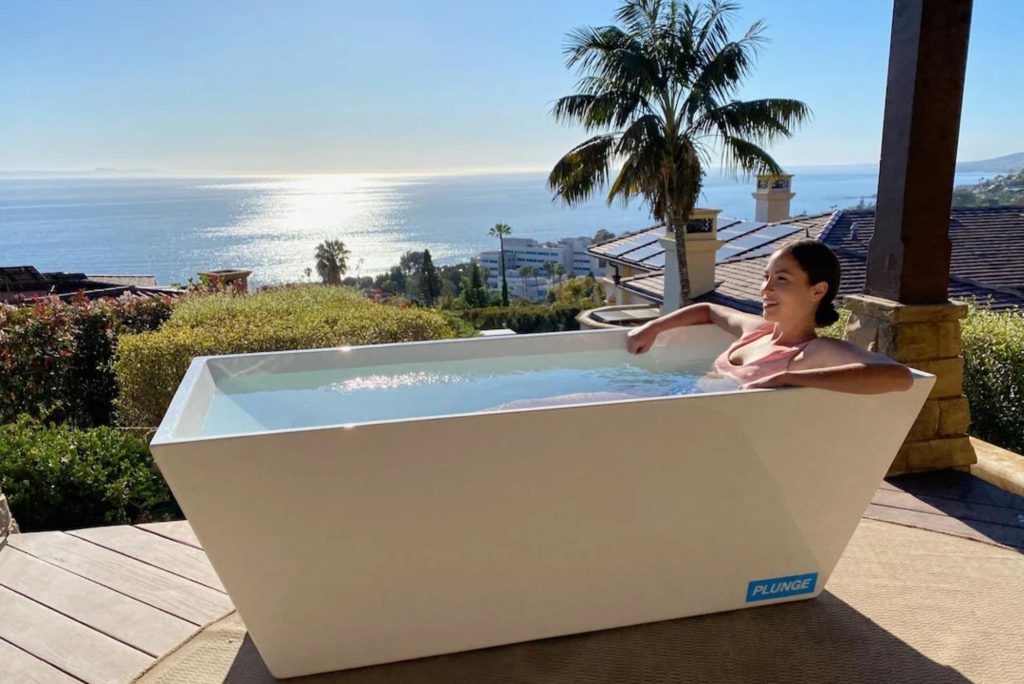
After testing and analyzing the current market landscape, one brand consistently sets the bar for design, functionality, and user experience: Plunge.
While early cold plunges were often ugly, industrial tubs meant for garages, Plunge (formerly The Cold Plunge) was the first company to design a unit that looked at home on a modern patio or in a bathroom. They turned a recovery tool into a piece of furniture. But beyond aesthetics, their technology has evolved into the most robust ecosystem available.
Here is a breakdown of their current lineup and why they are the top recommendation for 2025.
1. Model 1: The Plunge (Original)
This is the iconic model that launched the brand. It remains the best entry point for most homeowners who want a permanent, high-quality setup without the highest price tag.
-
The Design: It features a sleek, white acrylic bathtub design with “angled sides.” Unlike upright barrels, this allows you to lay back and relax your neck and shoulders, which is critical for calming the nervous system during the shock of cold entry.
-
Chiller Options:
-
Standard Chiller: Cools to 39°F. Ideal for indoor use or shaded outdoor areas.
-
Pro Chiller: Cools to 37°F and features 3x the cooling power. This is highly recommended if you live in a hot climate (like Texas or Florida) or plan to place the tub in direct sunlight. It also includes a heater mode to turn your cold plunge into a hot tub (up to 103°F).
-
-
Why We Love It: It fits individuals up to 6’8″ comfortably but has a relatively compact footprint (67″ long).
2. Model 2: Plunge All-In (The Premium Choice)
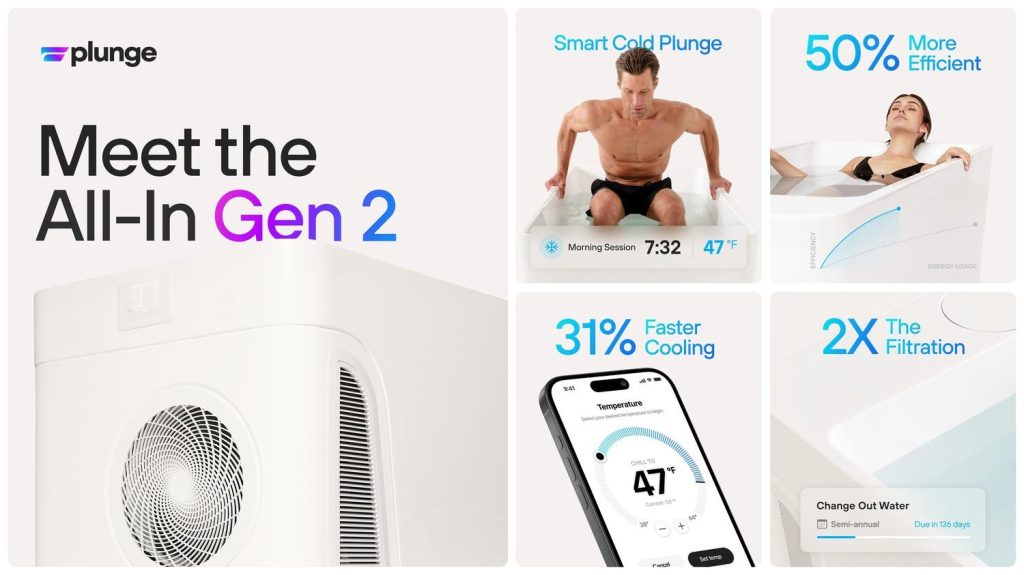
If budget is less of a concern and you want the “Tesla” of cold plunges, the All-In is the winner.
-
Integrated System: In the original model, the chiller is a separate box connected by hoses. The All-In integrates the chiller, pump, and filter inside the body of the tub. This results in a cleaner look with no external hoses or cords to trip over.
-
Performance: It runs on a powerful 1 HP chiller that is significantly quieter than previous generations. It can hold 37°F even in peak summer heat.
-
Smart Connectivity: This model is fully app-enabled. You can schedule the tub to turn on/off or adjust temperatures remotely from your smartphone—perfect for saving electricity while you are at work and having the tub icy cold the moment you return.
-
Maintenance: The filter is easily accessible from the top deck, making weekly maintenance a 30-second task.
3. Model 3: Plunge Air & Plunge Pod
Recognizing that not everyone has the space (or budget) for a rigid acrylic tub, Plunge introduced these versatile options.
-
Plunge Air: An inflatable, drop-stitch PVC model. Unlike cheap inflatables on Amazon, this is incredibly rigid when filled and uses the same high-end chillers as the rigid tubs. It packs down into a backpack, making it the only “portable” option in the lineup with a real mechanical chiller.
-
Plunge Pod: A unique “egg-shaped” insulated acrylic tub. It has a tiny footprint, making it perfect for apartment balconies or small gym corners. It requires you to sit in a more upright position but still offers the premium feel of the main line.
4. The “Plunge” Ecosystem & Support
Buying a Plunge is also buying into their ecosystem.
-
Sanitation: All models utilize circular filtration, Ozone sanitization, and a 20-micron filter. This trifecta means you only need to change the water roughly every 6 months.
-
Warranty: They offer a standard 1-year warranty with options to upgrade to 3 or 5 years.
-
Customer Service Note: As the company has scaled rapidly, some users have reported delays in support response times. However, the availability of replacement parts and a US-based support team generally places them far ahead of generic overseas brands that offer zero post-purchase support.
Comparing the Competition
To truly understand the value of the Plunge ecosystem, it is helpful to compare it against the other popular options on the market. While there are dozens of brands, most fall into three categories: Upright Barrels, Premium Stainless Steel Tubs, and DIY setups.
Here is how Plunge stacks up against the biggest names in the space.
1. Plunge vs. Ice Barrel
The Ice Barrel is a popular, lower-tech competitor often seen on social media. It is a vertical, plastic drum designed for upright immersion.
-
The Position (Reclined vs. Squatting): This is the biggest differentiator. In an Ice Barrel, you sit in a squatting position. While space-efficient, many users find it difficult to relax their shoulders and neck in this posture. The Plunge allows you to recline comfortably like you are in a bathtub. This “lounge” position makes it easier to surrender to the cold and control your breathing—a key component of the practice.
-
The “Ice” Factor: The standard Ice Barrel is designed to be filled with actual ice bags. While they now offer a chiller add-on, it is expensive and bulky. Plunge was designed from day one as a chiller-integrated system. It is seamless, whereas the Barrel + Chiller combo often feels like a retrofit.
-
Entry and Exit: Getting into the Plunge is as easy as stepping into a bath. The Ice Barrel requires you to climb up a step stool and lower yourself into a deep drum, which can be challenging for shorter individuals or those with mobility issues.
2. Plunge vs. Sun Home Cold Plunge Pro
Sun Home makes an industrial-grade “Cold Plunge Pro” that is often found in luxury gyms and NBA locker rooms.
-
Price Point: The Sun Home Pro is a beast, but it comes with a price tag to match—often starting north of $8,000. The Plunge starts at nearly half that price, making it a far more accessible option for residential buyers without sacrificing the core cooling performance.
-
Aesthetics: Sun Home uses a stainless steel, industrial design. It looks like medical equipment. Plunge uses sleek, white acrylic that looks like high-end furniture. For a home patio or bathroom, the Plunge blends in significantly better.
-
The “Ice” Feature: Sun Home units can actually generate floating ice. While this is a cool party trick, it is functionally unnecessary for 99% of users. 39°F water (which Plunge handles easily) is painfully cold and sufficient for all physiological benefits. Paying an extra $4,000 just to see floating ice is rarely worth it.
3. Plunge vs. DIY Chest Freezers
For years, the “chest freezer hack” was the only way to get a cold plunge at home. This involves caulking the seams of a food freezer and filling it with water.
-
Safety (The Dealbreaker): This cannot be overstated—chest freezers are not designed to hold water. They are high-voltage appliances. If the sealant fails or the water touches the electrical components, there is a very real risk of electrocution. Plunge units are purpose-built for water safety with GFCI protection and grounded electrical components.
-
Sanitation: A chest freezer has no pump or filter. The water sits stagnant. To keep it clean, you have to use heavy chemicals or drain it weekly. Plunge’s active filtration keeps water moving and clean for months.
-
Temperature Control: Regulating a chest freezer is a guessing game. You often wake up to a solid block of ice that you have to break with a hammer. A Plunge stays at your exact set temperature to within a degree, ready whenever you are.
Verdict: While competitors excel in niche areas (Sun Home for commercial durability, Ice Barrel for small footprints), Plunge hits the perfect “Goldilocks” zone: it is safer than DIY, more comfortable than a barrel, and significantly more affordable than industrial units.
Why Buy a Cold Plunge with a Chiller? (The “Ice Problem”)
For many, the journey into cold therapy starts in a standard bathtub or a cheap outdoor trough. While the enthusiasm is high initially, the logistics of maintaining an ice bath often lead to burnout. Upgrading to a dedicated tub with a chiller isn’t just a luxury; it is a practical necessity for anyone serious about making cold exposure a sustainable daily habit.
Here is why the chiller is the most critical component of your setup:
1. Precision and Consistency
To achieve hormetic stress—the “good” stress that triggers positive adaptations in the body—you need consistency.
-
The Ice Issue: In a traditional ice bath, the temperature is a moving target. As your body heat transfers to the water, the ice melts, and the temperature rises rapidly. It is difficult to know if you are plunging at 45°F or 55°F, making it impossible to track your progress or adaptation.
-
The Chiller Advantage: A high-quality chiller allows you to dial in a specific temperature (e.g., exactly 39°F) and hold it there indefinitely. This precision allows you to progressively overload your cold tolerance, much like adding weight to a barbell.
2. The Cost & Time Analysis
Many people balk at the upfront price of a cold plunge tub with a chiller, but the long-term math tells a different story.
-
The Cost of Ice: If you plunge 4 times a week, and each session requires ~40lbs of ice (roughly $10-$15 depending on your location), you are spending nearly $200 to $250 per month just on frozen water. Over two years, you could easily spend over $5,000 on ice alone.
-
The Cost of a Chiller: A chiller runs on electricity, typically costing less than $1 per day to operate. While the initial investment is higher, the system eventually pays for itself by eliminating the recurring cost of ice.
-
The Value of Time: Beyond money, there is the “time tax.” Driving to the store, hauling heavy bags, and waiting for the water to cool down can take 45 minutes. A chiller keeps the water ready 24/7, meaning a 3-minute plunge takes exactly 3 minutes of your day.
3. Hygiene and Water Quality
Perhaps the most overlooked factor is water sanitation.
-
Stagnant Water: Without a chiller and circulation pump, a tub of water is essentially a stagnant pond. Skin cells, oils, and bacteria accumulate rapidly. To keep it safe, you have to drain and refill the tub constantly, which is wasteful and labor-intensive.
-
Active Filtration: Chillers—especially those found in premium units like Plunge—are part of a broader circulation system. They constantly move water through 20-micron filters, Ozone sanitation, or UV light treatments. This keeps the water crystal clear and safe for months at a time without a water change.
4. Removing the Friction
Behavioral science tells us that to build a habit, we must reduce friction. If you have to work hard just to prepare your cold plunge, you will find excuses to skip it when you are tired or busy.
When you have a unit with a chiller, the water is always waiting for you. The barrier to entry drops to zero, dramatically increasing your consistency and adherence to the protocol.
The Science: Health Benefits of Consistent Cold Plunging
While the “rush” of cold water is undeniable, the physiological changes occurring beneath the surface are what make cold plunging a pillar of modern health protocols. However, these biological adaptations rely heavily on consistency. Occasional exposure provides a temporary shock, but regular immersion—facilitated by a cold plunge tub with a chiller—drives lasting change.
Here is a breakdown of the primary health benefits supported by current research.
1. Physical Recovery & Inflammation Control
This is the benefit most cited by athletes. When you submerge in cold water, your body undergoes vasoconstriction, causing blood vessels in the extremities to tighten and forcing blood toward your vital organs.
-
The Flush Effect: Upon exiting the cold, the body experiences vasodilation, causing fresh, oxygenated blood to rush back into muscle tissues. This process helps flush out metabolic waste products like lactic acid and lymphatic fluid that accumulate during exercise.
-
Reducing Inflammation: Cold exposure significantly lowers systemic inflammation and reduces delayed onset muscle soreness (DOMS). This allows athletes to train harder and recover faster, maintaining peak performance day after day.
2. Metabolic Health & Brown Fat Activation
Not all body fat is created equal. Most of us are familiar with white adipose tissue (energy storage), but cold exposure activates a metabolically active “super tissue” known as Brown Adipose Tissue (BAT).
-
Thermogenesis: BAT is packed with mitochondria and is responsible for generating heat to keep the body warm. Regular cold plunging stimulates the growth and activity of brown fat.
-
Caloric Burn: To maintain core temperature in 40°F – 50°F water, the body engages in shivering thermogenesis, which can significantly increase metabolic rate. Over time, higher levels of active brown fat improve insulin sensitivity and glucose metabolism, acting as a buffer against metabolic disorders.
3. Mental Fortitude & The Dopamine Spike
Perhaps the most profound benefit of cold plunging is neurological. As popularized by neuroscientist Dr. Andrew Huberman, deliberate cold exposure triggers a massive release of neurotransmitters.
-
The 2.5x Dopamine Boost: Studies show that cold immersion can increase dopamine levels by 250%, a rise comparable to nicotine or cocaine, but without the crash. This elevation is sustained for hours, leading to improved focus, mood, and motivation throughout the day.
-
Norepinephrine: The shock of the cold also releases norepinephrine, a chemical associated with vigilance and attention.
-
Resilience Training: Voluntarily entering freezing water is a “top-down” control exercise. You are training your prefrontal cortex to override your limbic system (the fight-or-flight response). This practice builds mental grit, helping you stay calm under pressure in other areas of life, from stressful meetings to traffic jams.
4. Immune System Enhancement
Regular cold water immersion has been linked to a robust immune response.
-
Leukocyte Boost: The acute stress of the cold stimulates the production of leukocytes (white blood cells) and granulocytes, which fight off infection.
-
Lymphatic Drainage: Unlike the heart, the lymphatic system relies on muscle contraction to move fluid. The pump-effect of vasoconstriction and shivering helps circulate lymph fluid, clearing out toxins and supporting the body’s natural defense mechanisms.
By utilizing a cold plunge tub with a chiller, you ensure that the water is always at the precise temperature required to trigger these physiological responses, maximizing the return on your time investment.
Buyer’s Guide: Key Features to Look For
Investing in a cold plunge tub with a chiller is a significant decision. The market is flooded with options, from cheap imports to luxury wellness appliances.
To ensure you aren’t just buying an expensive bathtub, you need to understand the technical specifications that differentiate a high-performance unit from a lackluster one.
Here are the five key features you must evaluate before making a purchase.
1. Cooling Power (Horsepower)
The heart of any cold plunge system is the chiller. Its strength is measured in Horsepower (HP), which dictates how fast the water cools down and how well it maintains that temperature in hot environments.
-
1/4 HP Chillers: Common in entry-level, inflatable models. These are often sufficient for indoor use in climate-controlled rooms but struggle significantly outdoors in the summer heat. They may take 12+ hours to cool water from room temperature to 50°F.
-
1/2 HP Chillers: The “sweet spot” for most residential users. A 1/2 HP chiller, like the standard model offered by Plunge, is powerful enough to maintain 39°F even in warmer climates and cools the water much faster.
-
1 HP Chillers (Pro Models): Designed for high-volume commercial use (gyms, spas) or extreme climates (e.g., Arizona or Florida summers). These cool water roughly 3x faster than standard units. If you plan to have multiple people plunging back-to-back, high horsepower is non-negotiable to recover the temperature quickly.
2. Filtration and Sanitation
One of the main reasons to buy a specialized tub is to avoid the “swamp water” effect. You want a system that actively cleans the water so you don’t have to drain and refill it constantly.
-
Particulate Filtration: Look for a 5-micron or 20-micron filter that catches hair, skin cells, and debris.
-
Ozone (O3) Sanitation: This is the gold standard. Ozone is a powerful oxidizer that breaks down bacteria and viruses on contact. It reduces the need for harsh chemicals like chlorine, keeping the water gentle on your skin and eyes.
-
UV-C Light: Often paired with Ozone, UV light disrupts the DNA of microorganisms, preventing them from reproducing.
-
Tip: The best systems (like Plunge) combine physical filtration with Ozone or UV to keep water crystal clear for up to 6 months.
3. Material and Insulation
The vessel itself matters just as much as the chiller. Poor insulation forces the chiller to work overtime, driving up your electricity bill and shortening the unit’s lifespan.
-
Inflatable (Drop-stitch PVC): Portable and cheaper, but less insulated. These are susceptible to ambient temperature swings and punctures.
-
Stainless Steel: Extremely durable and hygienic, but can be uncomfortable against bare skin and conducts heat (requiring heavy external insulation).
-
Acrylic / Fiberglass: The premium choice. Similar to a high-end bathtub, acrylic is smooth, comfortable, easy to wipe down, and offers superior thermal retention when properly insulated. It also looks like a piece of furniture rather than gym equipment.
4. Form Factor: Tub vs. Barrel
How do you want to plunge?
-
The Barrel (Upright): You sit in a squatting position. These have a smaller footprint, making them good for tight spaces. However, getting full-body submersion often requires dunking your head or contorting your body.
-
The Tub (Recumbent): You lie down flat. This is generally considered the superior experience for relaxation and total immersion. It allows you to fully extend your legs and submerge up to your neck comfortably, which is critical for stimulating the Vagus nerve.
5. Connectivity and Control
Modern cold plunge tubs are smart devices.
-
App Integration: Can you turn the tub on/off or change the temperature from your phone? This is incredibly useful if you want to save energy by scheduling the chiller to run only during certain hours or turn it up remotely before you get home from work.
-
Noise Level: Cheaper chillers can sound like a lawnmower. High-end units are engineered for silence, humming quietly in the background so they don’t disturb your peace (or your neighbors).
Installation & Maintenance Tips
Owning a cold plunge with a chiller is relatively low maintenance compared to a swimming pool or hot tub, but it is not “set it and forget it.” To ensure longevity and water clarity, you need to follow a few basic protocols.
Here is what you need to know before your delivery truck arrives.
1. Electrical Setup
Most residential cold plunge units, including the standard Plunge, are designed to plug into a standard 110v household outlet.
-
Dedicated Circuit: While many units can share a circuit, it is highly recommended to have a dedicated circuit if possible. Chillers have a compressor that draws a surge of power when it kicks on (startup amperage). Sharing this circuit with a hair dryer or space heater can trip the breaker.
-
GFCI Protection: Since you are mixing electricity and water, never plug a cold plunge directly into a wall outlet without GFCI (Ground Fault Circuit Interrupter) protection. Most outdoor outlets have this built-in, but check your indoor bathroom outlets. If you use an extension cord, ensure it is a heavy-duty, outdoor-rated cord with a built-in GFCI breaker.
2. Water Chemistry & Sanitation
The “secret sauce” to keeping your water crystal clear for 3–6 months is a consistent maintenance schedule.
-
The Weekly Routine:
-
Skim: Use a small net to remove any hair, leaves (if outdoors), or debris floating on the surface.
-
Check Filter: Rinse the particulate filter with a hose every 1-2 weeks. Replace it monthly or as needed.
-
Oxidizer: Add a small amount of non-chlorine oxidizer (like Sirona) once a week. This “shocks” the water and helps the ozone/UV system work more effectively.
-
-
Hydrogen Peroxide vs. Chlorine:
-
Plunge recommends using 35% food-grade Hydrogen Peroxide as a sanitizer. It is odorless and gentle on the skin.
-
Avoid: Heavy chlorine tablets (like those for pools). They can degrade the acrylic and seals over time, voiding your warranty.
-
3. Placement Considerations
Where you put your tub matters for cooling efficiency.
-
Indoor vs. Outdoor:
-
Indoors: Ensure the room has good ventilation. Chillers expel heat. If you put a powerful chiller in a small, closed closet, it will heat up the room and struggle to cool the water.
-
Outdoors: Shade is your friend. Direct sunlight forces the chiller to work much harder. If you must place it in the sun, use the insulated cover whenever the tub is not in use. This acts like a thermos lid, locking in the cold.
-
-
Weather Protection: If you live in an area that freezes, keep the pump running 24/7 to prevent pipes from freezing. If you expect a hard freeze (below 32°F for extended periods), you may need to drain the unit or use a specialized tank heater.
FAQ
Even with all the data, new plungers often have a few lingering questions. Here are the most common inquiries about owning and operating a cold plunge tub with a chiller.
Q: How long should I stay in the cold plunge? A: More is not always better. For general health benefits, research suggests a total of 11 minutes per week is the minimum effective dose. This can be broken down into 2-4 sessions of just 2-5 minutes each. Staying in longer than 10 minutes can increase the risk of hypothermia without adding significant benefit.
Q: What is the best temperature for beginners? A: Do not start at 39°F. This is a common mistake that leads to “cold shock” and quitting early.
-
Beginners: Start around 50°F – 55°F. This is cold enough to trigger the physiological response but manageable enough to control your breathing.
-
Intermediate: Once you can sit comfortably for 3 minutes, drop the temperature by 1-2 degrees per session.
-
Advanced: Aim for 39°F – 45°F. At this level, you are maximizing the metabolic and resilience benefits.
Q: Does a chiller use a lot of electricity? A: Surprisingly, no. A standard 1/2 HP chiller is quite efficient. On average, it costs between $15 and $30 per month to run, depending on your local electricity rates and the ambient temperature (if the unit is outdoors). This is significantly cheaper than buying $200 worth of ice bags every month.
Q: Can I put the Plunge outside in the winter? A: Yes, but you need to be careful. If the ambient temperature drops below freezing (32°F), the water in the pipes can freeze and crack the chiller.
-
Prevention: Keep the water circulating 24/7 (do not turn the pump off). Moving water is much harder to freeze.
-
Hot & Cold Models: If you live in a very cold climate, consider the Plunge Pro or All-In models with heating capabilities. These can keep the water at a safe 40°F even when it is 10°F outside.
Conclusion
The transition from a bag-of-ice habit to a dedicated cold plunge tub with a chiller is a significant leap. It transforms a messy, inconsistent chore into a refined, daily ritual.
We have established that while the upfront cost is higher, the long-term value is undeniable. You eliminate the recurring cost of ice, save hours of preparation time, and gain the ability to dial in the precise temperature needed for optimal recovery and mental resilience.
After reviewing the landscape of 2025, Plunge remains the undisputed champion. They have successfully bridged the gap between industrial recovery equipment and modern home design. With the best balance of cooling power, filtration technology, aesthetic appeal, and customer support, the Plunge ecosystem offers the smoothest path to making cold therapy a permanent part of your life.
Whether you choose the standard model for your bathroom or the All-In for your backyard sanctuary, investing in a Plunge is investing in your most valuable asset: your body’s ability to recover, adapt, and thrive.
Disclaimer: The information provided in this article is for educational purposes only and is not intended to substitute for professional medical advice, diagnosis, or treatment. Please consult with a healthcare provider before beginning any cold therapy regimen, as you assume all risks associated with the practice.